
Cricket Tools That Win Matches
Join 50,000+ fans using our free calculators & predictors daily
Leg Before Wicket, or LBW, is one of the most contentious and technically intricate rules in cricket. To the uninitiated, fans and players alike, it can often be bewildering to understand exactly what goes on when making an LBW decision. This is where an LBW Review Calculator becomes indispensable by helping users check and predict whether a batsman is out LBW based on key factors considered by umpires and technology.
Table of Contents
How to Use LBW Decision Calculator
here are the steps users need to follow to calculate an LBW decision using the LBW Review Calculator:
- Input Ball Pitching Details: Users must specify where the ball pitches on the cricket pitch. The ball should pitch in line with the stumps or on the off side for the LBW appeal to be valid.
- Provide Point of Impact: Users need to indicate where the ball hits the batsman—whether it’s in line with the stumps or outside the off stump. The LBW rules consider impact in line with the wickets mainly unless no shot is offered and impact is outside off stump.
- Analyze Ball Trajectory: The tool requires details or simulation data on the predicted path of the ball after impact to check if the ball would go on to hit the stumps.
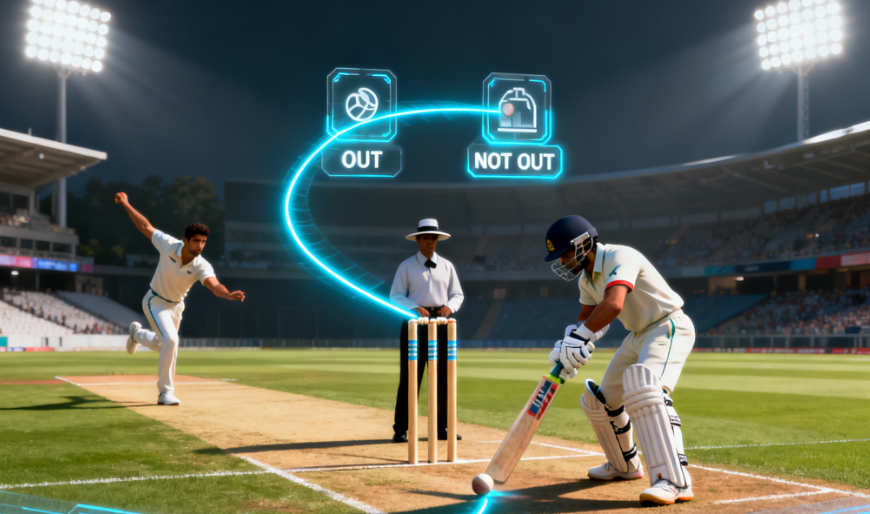
- Get LBW Decision: Based on the input data for pitch, impact, and trajectory, the calculator simulates the Decision Review System (DRS) process and outputs an LBW decision—either “out” or “not out”.
These steps mimic how umpires and technology assess LBW appeals in real cricket matches, providing users with a close-to-official decision review experience by analyzing crucial factors for LBW decisions.
What is an LBW Review Calculator?
An LBW Review Calculator is a tool designed to simulate the Decision Review System (DRS) used in modern cricket. This cricket LBW analysis tool assesses the path of the ball, the impact point on the batsman, and whether the ball would hit the stumps-the three pillars that decide an LBW call. With the use of ball tracking data and game rules, the LBW calculator makes the prediction of the result of an LBW appeal to help the user understand the decision taken by the umpire or gain clarity over contentious moments.
How Does the LBW Decision Calculator Work?
The LBW decision calculator is based on the principles followed by umpires and the DRS technology. It takes into account:
- Where the ball pitches: The ball must pitch in line with the stumps or on the off side to be considered for LBW. If it pitches outside the leg stump, it’s not out.
- Point of impact: The ball must strike the batsman in line with the stumps unless the batsman is not attempting a shot and gets hit outside the off stump.
- Ball trajectory: The predicted path of the ball after impact must indicate it will hit the stumps for an LBW to be given.
By analyzing these factors, the LBW prediction tool determines whether the batsman is likely out or not out.
Why Use a Cricket LBW Analysis Tool?
The umpire’s call in an LBW decision can sometimes leave players and fans frustrated due to its marginal nature. The LBW Review Calculator bridges this gap by providing a scientific assessment of the delivery. It becomes extremely useful when the on-field umpire’s decision is reviewed through DRS, offering insights on whether the original call should stand or be overturned.
Benefits of Using an LBW Review Calculator
- Accurate simulation of the Decision Review System to help check LBW decisions.
- Useful for players, coaches, and cricket enthusiasts to analyze controversial dismissals.
- Enhances understanding of LBW rules and improves cricketing knowledge.
- Great for cricket fans who want to test their prediction skills and appreciate the nuances of the game.
FAQs
What does LBW stand for in cricket?
LBW stands for Leg Before Wicket. It is a rule where the batsman can be given out if the ball hits their leg in line with the stumps and the ball would have hit the wickets.
How accurate is the LBW Review Calculator?
The LBW Review Calculator uses principles similar to those in the Decision Review System (DRS) used in professional cricket. While it provides a close estimation, it may not match perfectly with official umpire decisions due to lack of real-time ball-tracking data.
Can I use the calculator for all formats of cricket?
Yes, the LBW rules are consistent across Test, ODI, and T20 formats, so this calculator can be used to simulate LBW decisions in all match types.
What is ‘Umpire’s Call’ in LBW decisions?
‘Umpire’s Call’ refers to the margin of uncertainty in DRS LBW decisions where the technology shows the ball clipping the stumps marginally. In such cases, the original on-field umpire decision is upheld.
Helpful Reference
For a detailed understanding of LBW rules and umpire decisions including ‘Umpire’s Call,’ visit the International Cricket Council (ICC) official explanation:
ICC LBW Rule Explanation
You can also read more about the Decision Review System here:
Decision Review System (DRS) – Wikipedia
Disclaimer
The LBW Review Calculator is an educational tool designed to simulate LBW decisions based on standard cricket rules and available data inputs. It does not replace official umpire decisions or professional DRS technology used in international cricket matches. Results are approximate and intended to help fans, players, and enthusiasts better understand the LBW decision process. Please use it as a guide and not as an absolute ruling.
Cricket Stance provides fantasy cricket tips for entertainment purposes only. Participation in paid contests is for users 18+ and subject to local laws.


