Win Margin Predictor
Predict who will win the match and by how much
The game of cricket is not solely about taking runs and wickets; it’s also a combination of intricate tactics, sudden surges, and thrilling finales. Footballers will acknowledge this fact more than once. With numerous variables at play, fans and analysts are eager to predict the outcome of a game, including the win margin, which is commonly known as “the scarcity of team wins”.
This blog will explain what win margin is, how predictive tools (such as the “Cricket Match Win Margin Predictor” calculator work!) and answer some common questions about predicting the outcome of cricket matches.?
Table of Contents
What is a Win Margin in Cricket?
The “win margin” in cricket describes how decisively a team clinched victory, expressed as either:
- Runs: If the team batting first wins, the margin is the number of runs they’re ahead by when the second team is bowled out or runs out of overs.
- Wickets: If the team batting second wins, it’s the number of wickets they had in hand when they surpassed the target.
- Balls Remaining: Sometimes, especially in T20s, it’s also helpful to express the win in terms of how many deliveries were left when the chasing team won.
A larger margin indicates a dominant win, while a small margin reflects a close contest.
How to Use the Cricket Match Win Margin Predictor
Using the win margin calculator on this page is simple and intuitive:
- Input Scores: Enter the total runs scored by the team batting first, followed by the current runs, wickets lost, and overs completed by the team batting second.
- Total Overs: Specify the number of overs per innings (e.g. 20 for T20, 50 for ODIs).
- Who Will Win?: Select which team you believe will win—batting first or chasing.
- Get Prediction: Click “Predict” to get a projected win margin as per current match status and scoring rate.
- Reset: Start over with the reset button if you want to test a different scenario or live update.
The tool instantly analyses the run rates, wickets in hand, and balls left to give you a likely win margin—either in runs (batting first) or wickets/balls left (chasing team).
How Does the Calculator Estimate Win Margin?
Win margin prediction involves projecting how the rest of the match could unfold:
- Runs/Scoring Rate: The tool uses the current run rate and remaining deliveries to estimate how many runs the second team might finish with (if chasing).
- Wicket Penalty: Losing more wickets generally lowers the scoring rate, so the calculator applies a penalty based on wickets lost.
- Runs Ahead/Behind: For batting first teams, the calculator determines how far ahead the first team is and projects whether that gap will close or widen.
- Edge Cases: If the chasing team has already surpassed the target or can’t possibly win with their current rate/wickets, the tool reflects that in its result.
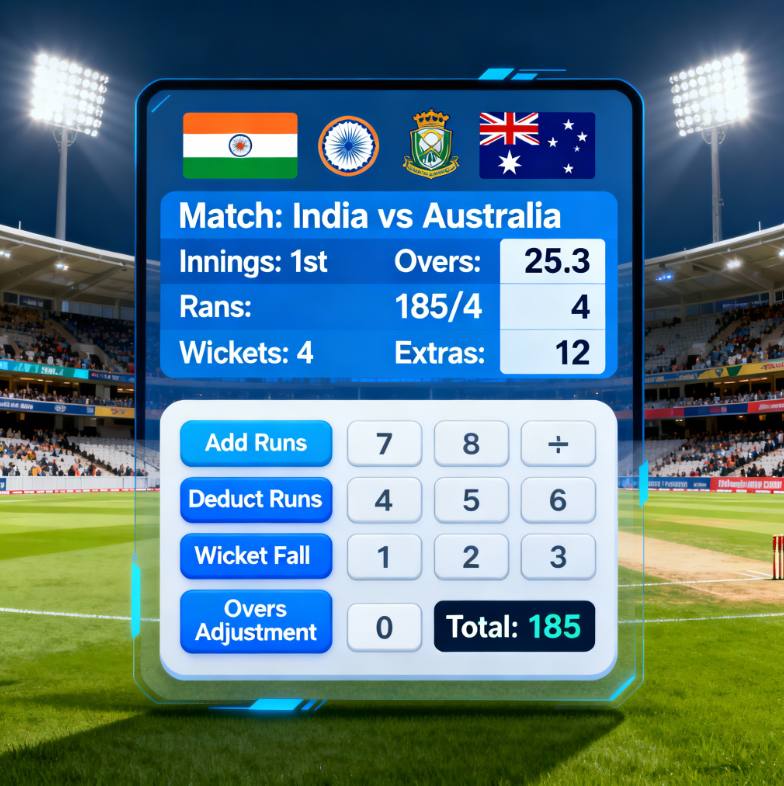
This approach is inspired by commonly used cricket models and analytical methods, though it is a simplified variant—more advanced models also factor in historical player data, pitch conditions, and other match variables.
Types of Wins in Cricket
There are three main ways a cricket match can be won:
- By Runs: Team batting first sets a target, and restricts the opposition from chasing it.
- By Wickets: Team batting second successfully chases the first team’s score and still has wickets left.
- By Balls Remaining: If a chase is successful, fans often note how many balls were left unused, indicating how comfortably the target was hunted down.
In rare cases, a match can be tied, or decided by a “Super Over”.
Frequently Asked Questions (FAQs)
Is this predictor accurate for all formats (T20, ODI, Test)?
The calculator is most accurate for limited-overs formats (T20s and ODIs) because it assumes both teams play their full quota of overs.
Does the calculator consider pitch and weather?
This tool uses only scores, wickets, and balls bowled—not external match conditions or player form. For deeper analysis, machine learning models and expert input are used in professional predictions.
What happens if both teams score the same?
The predictor recognizes this as a tie, unless there is a Super Over scenario.
Can I use this for betting predictions?
he tool is meant for fun and educational use only and should not be the sole input for betting decisions. Actual outcomes depend on many factors outside the scope of this tool.
References and More Reading
- [Cricket Win Margin Prediction Models – ScienceDirect]
- [Cricket Match Outcome Prediction (IJARCCE)]
- [Winning Margin Explained (Betpack)]
- [Boosting algorithms in Cricket Prediction]
Disclaimer
All results of the “Cricket Match Win Margin Predictor” are based on mathematical formulas and simplifications. Real matches’ results are influenced by various unpredictable factors, including player performance, pitch conditions, weather, and luck. This is a cricket tool that provides insight and entertainment, not gimmicks or professional match analysis. There is no official cricket body associated with the blog or tool.
Cricket Stance provides fantasy cricket tips for entertainment purposes only. Participation in paid contests is for users 18+ and subject to local laws.


