The sport of cricket is a source of fascination and enjoyment for millions of people worldwide. For those who are new to cricket, certain regulations may appear daunting at first. Catching a batter is one of the most significant means of getting out.
Understanding the catch rules in cricket can increase your level of enjoyment and help you keep track of the game.
In plain English, this guide is designed for those who have no experience in cricket. You’ll be able to comprehend what a catch is, whether it’s legitimate or not, and the different types of catches used in the game by the end. Additionally,
Table of Contents
What Is a Catch in Cricket?
A catch happens when:
- A fielder catches the ball after the batter hits it
- The ball is caught before it touches the ground
- The batter is then given out
In short:
👉 If the ball touches the bat and a fielder catches it cleanly in the air, the batter is out.
This method of dismissal is called Caught.
Why Catch Rules Are Important in Cricket
Catch rules exist to:
- Ensure fair dismissals
- Prevent cheating
- Maintain consistency across matches
- Protect players
Since catching happens very quickly, clear rules help umpires make correct decisions.
Basic Catch Rules in Cricket
Here are the fundamental rules that define a legal catch:
1. Ball Must Be Hit by the Bat
The ball must touch:
- The bat, or
- The glove holding the bat
If the ball only touches the batter’s body and is caught, it is not out.
2. Ball Must Be Caught Before Touching the Ground
If the ball touches the ground first, even slightly:
❌ Not Out
The ball must stay completely in the air until controlled by the fielder.
3. Fielder Must Have Control
The fielder must:
- Hold the ball firmly
- Show control before releasing
If the ball pops out after taking a step or two, the catch may be ruled not out.
4. Catch Must Be Inside the Boundary
The fielder’s feet must not touch outside the boundary while completing the catch.
If any part of the fielder touches outside the rope during the catch:
❌ Not Out
5. Fair Delivery
The ball must be a legal delivery.
If the ball is a no-ball, a catch does not count (with very limited exceptions in some formats).
What Is Considered a Legal Catch?
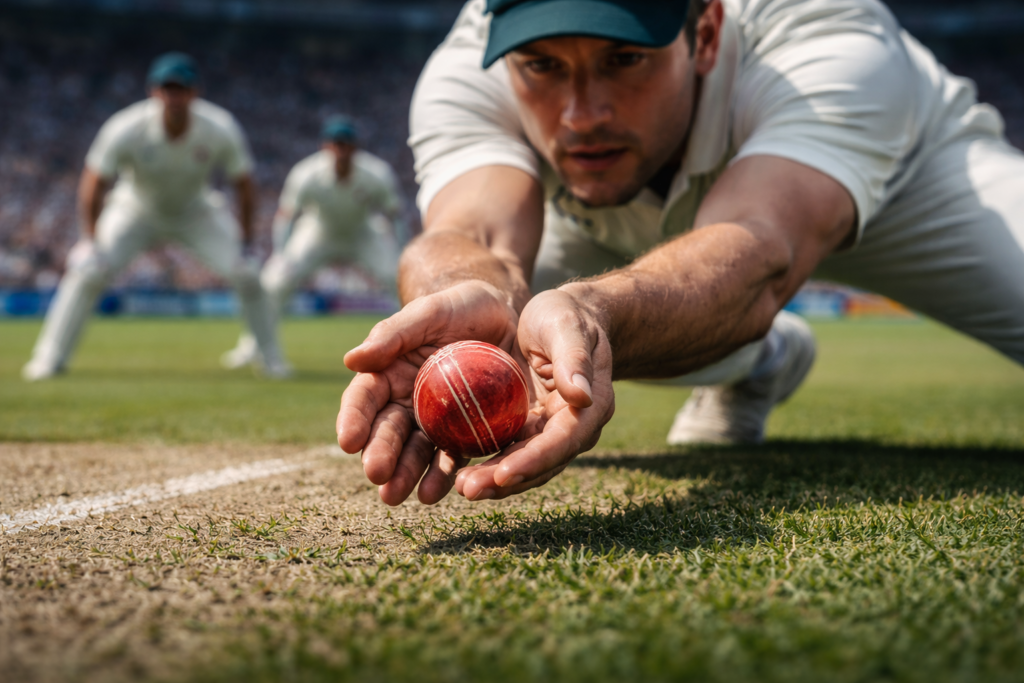
A legal catch means:
✔ Cleanly caught
✔ Inside boundary
✔ Ball never touched ground
✔ From a legal delivery
✔ Off bat or glove
When all conditions are met, the batter is out.
- Loading relevant tools…
What Is NOT a Legal Catch?
A batter is not out if:
- Ball touched ground
- Fielder stepped on boundary rope
- Ball came from a no-ball
- Ball hit pad only
- Fielder used clothing or helmet to trap ball
Types of Catches in Cricket
There are many kinds of catches depending on position and difficulty.
1. Slip Catch
- Taken behind the batter
- Very close to the wicket
- Usually fast and low
Common in fast bowling.
2. Caught and Bowled
- Bowler catches the ball himself
One of the most satisfying dismissals.
3. Outfield Catch
- Taken near boundary
- Usually high in the air
Requires good judgment and athleticism.
4. Diving Catch
- Fielder dives forward or sideways
- Very spectacular
Must still be clean.
5. One-Handed Catch
- Taken with a single hand
- Popular in modern cricket
Still must be controlled.
6. Close-In Catch
- Short leg, silly point, gully positions
- Very quick reactions needed
Boundary Catch Rules Explained
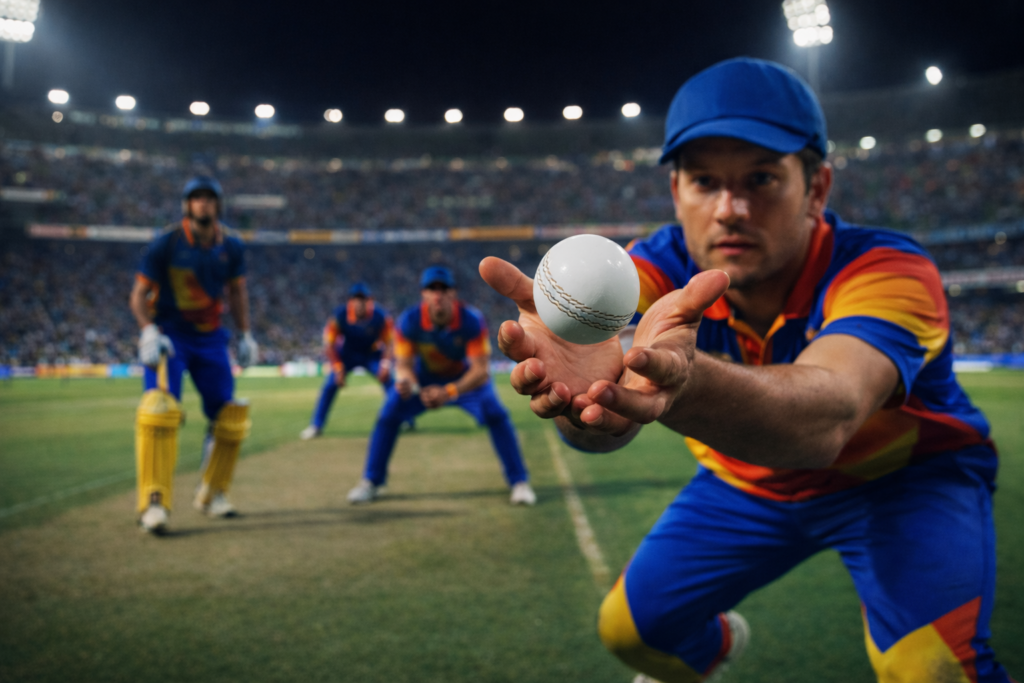
Catching near the boundary has special conditions:
- Fielder may jump from inside boundary
- Catch ball in air
- Throw ball upward
- Land inside boundary
- Re-catch inside field
As long as no body part touches outside rope during control, it is legal.
Can a Fielder Step Outside After Catch?
Yes.
Once the fielder has:
✔ Full control
✔ Both feet inside
They may fall or step outside afterward.
Can Two Fielders Combine for a Catch?
Yes.
Multiple fielders can:
- Tap ball to each other
- As long as neither touches ground or boundary
This is called a relay catch.
Helmet and Catch Rule
If the ball hits a helmet placed on the ground by fielding side:
- Ball becomes dead
- Batter cannot be out
Catch Off the Bat Edge
Even a tiny edge is enough.
If ball:
- Slightly touches bat
- Caught by wicketkeeper or slips
Batter is out.
Catch Off the Glove
If glove is holding the bat:
✔ Out
If glove is NOT holding bat:
❌ Not out
No Ball and Catch
On a no-ball:
- Batter cannot be out caught
- Except if hit wicket in rare cases
Umpire calls no-ball first.
How Umpires Decide Close Catch Decisions
Umpires may use:
- UltraEdge / Snickometer
- Slow-motion replays
- Multiple camera angles
This is part of DRS (Decision Review System).
Common Catching Mistakes by Beginners
- Taking eyes off ball
- Poor hand positioning
- Fear of ball
- Standing too rigid
Simple Catching Tips
- Watch ball till end
- Soft hands
- Fingers pointing up for high catches
- Fingers pointing down for low catches
Why Catches Are So Important in Cricket
- Main way of taking wickets
- Shows fielding quality
- Can change match momentum
Great fielding teams usually win more matches.
Catch Rules in Different Formats
Rules remain mostly same across:
- Test Cricket
- ODI
- T20
Only slight variations in technology usage.
Beginner Example
Batter hits ball → Ball goes up → Fielder catches before ground → Fielder inside boundary → Umpire raises finger → Batter is out.
Simple!
Frequently Asked Questions (FAQ)
What is a catch in cricket?
A catch is when a fielder catches the ball hit by the batter before it touches the ground.
Can a batter be out caught on a no-ball?
No, a batter cannot be out caught on a no-ball.
Does glove count as bat?
Yes, if glove is holding the bat.
What happens if ball touches ground slightly?
The catch is not valid.
Can a fielder juggle the ball?
Yes, if ball never touches ground and control is shown.
Can two fielders combine to take a catch?
Yes.
What is caught and bowled?
When bowler catches the batter’s shot himself.
Is boundary cushion part of field?
No. Touching it makes catch invalid.
What is relay catch?
When more than one fielder helps complete the catch.
Is helmet allowed to be used?
No. If ball hits helmet on ground, it is dead.
Reference Links
- https://www.lords.org/mcc/the-laws-of-cricket
- https://www.icc-cricket.com/about/cricket/rules-and-regulations
- https://www.espncricinfo.com
Disclaimer
This article is for educational and informational purposes only. Cricket laws may be updated by official governing bodies such as the ICC and MCC. Always refer to official law books for the latest rules. This website is not affiliated with the ICC or MCC.

