Cricket Bowling Speed Calculator
Want to know how fast you bowl without using an expensive speed gun? Our Bowling Speed Calculator lets you calculate your cricket bowling speed instantly using just the ball's travel time and distance. Whether you're a fast bowler, coach, cricket enthusiast, or practicing in the nets, this free online calculator helps you measure bowling speed accurately in both km/h and mph.
Simply enter the distance the ball travelled, the time taken to reach the batsman, and click Calculate. The calculator instantly displays your bowling speed and even lets you visualize the delivery through an animated bowling simulator.
Whether you're trying to measure your fastest delivery, compare bowling speeds with your teammates, or improve your pace over time, this tool provides a quick and reliable way to track your progress.
How to Use an Online Cricket Bowling Speed Calculator
- Set Up: Place markers at the start (bowler’s release point) and end (stumps or bat).
- Measure Distance: Use the default cricket pitch length (20.12 meters) or adjust if needed.
- Record Time: Use a stopwatch or frame-by-frame phone recording to capture time from ball release to the targeted event (bat or stumps).
- Enter Details: Input the distance and time in the calculator, select your desired unit (km/h or mph), and get instant results.
Table of Contents
What is a Cricket Bowling Speed Calculator?
A cricket bowling speed calculator is a software program—most often an online application or a mobile app—designed to help cricketers measure their bowling speed accurately. Earlier, bowling speed would be calculated with the help of advanced radar guns or camera systems in high-level stadiums. But now with current calculators, you only need the ball travel distance (usually 20.12 meters—the length of a cricket pitch) and the time taken by the ball to reach the stumps or the batsman.
This not only helps skilled players track pace enhancements, but also offers hobbyists and beginners quantitative feedback while training or playing casual games.
How Do You Calculate Bowling Speed?
The formula for calculating bowling speed is straightforward:
Speed= Time/Distance
To convert this into the speed formats commonly used in cricket, the result may be shown in either kilometers per hour (km/h) or miles per hour (mph). For example, if your delivery covers 20.12 meters (the length of a pitch) in 0.50 seconds:
- Speed (meters/second) = 20.12 / 0.50 = 40.24 m/s
- Speed (km/h) = 40.24 x 3.6 = 144.86 km/h
- Speed (mph) = 40.24 x 2.23694 = 89.99 mph
This is exactly how any capable cricket ball speed calculator works—by taking the input distance and time, then converting it into your preferred units.
Why Measure Bowling Speed?
Measuring bowling speed serves multiple purposes:
- Performance Tracking: See if you’re getting faster over time
- Technique Tuning: Identify if adjustments in run-up or arm action impact your pace
- Coaching: Coaches use speed data to evaluate and improve bowlers’ techniques
- Talent Identification: Raw pace is a critical criterion for promoting young fast bowlers
Real-time feedback on bowling speed has changed how cricket is played and watched, adding excitement for bowlers, batters, and fans alike.
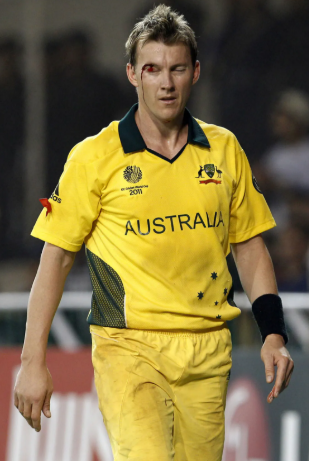
Average Bowling Speeds (Comparison Table)
Beginner: 80–100 km/h
Intermediate: 100–120 km/h
Fast bowler: 130+ km/h
How to Increase Your Bowling Speed (Pro Tips)
Want to bowl faster? Improving bowling speed requires a combination of strength, technique, and consistency. Here are proven ways to increase your pace:
- Improve Run-Up Speed: A smooth and fast run-up generates more momentum.
- Strength Training: Focus on legs, core, and shoulders for explosive power.
- Work on Bowling Action: Maintain a straight arm and strong follow-through.
- Flexibility & Stretching: Prevent injuries and improve movement efficiency.
- Practice Consistently: Repetition builds muscle memory and speed.
Pro Tip: Even a 5–10 km/h increase can significantly improve your performance.
Average Bowling Speed by Age
| Age Group | Average Speed | Category |
|---|---|---|
| Under 14 | 80 – 100 km/h | Beginner |
| 15 – 18 | 100 – 120 km/h | Intermediate |
| 19 – 23 | 120 – 135 km/h | Advanced |
| Professional | 135 – 150+ km/h | Fast / Express |
This comparison helps you understand where your bowling speed stands relative to your age group.
Evolution of Measuring Bowling Speed
Initially, bowling speeds were roughly estimated by eye or with basic timing—start a stopwatch as the ball was released and stop it when the ball hit the pitch or bat. Such human-based methods, although still fun for backyard experimentation, are open to human variability. Serious cricket today uses radar guns based on Doppler radar or super-speed cameras (like HawkEye) to offer millisecond accuracy.
But for most amateurs and clubs, electronic calculators make handy stand-ins—just need a stopwatch or phone video to take the time and type in the value along with the measured distance.
How Accurate Are Bowling Speed Calculators?
Manual calculators are ideal for practice and training sessions. The main margin of error arises from human reaction time in starting/stopping the timer. Radar guns remain the gold standard in professional environments, but reputable online calculators deliver sufficiently accurate readings for most practical needs. Speed gun errors are possible—occasionally recording impossible speeds or inconsistencies during matches due to technical glitches.
Key Features of the Bowling Speed Calculator
- Responsive and visually appealing on any device
- Support for both metric (km/h) and imperial (mph) units
- Options for different scenarios: stumps, bat, or passed bat
- Instant calculation and easy-to-understand results
How Does the Bowling Speed Calculator Work?
The calculator uses one of the simplest formulas in physics:
Speed = Distance ÷ Time
Where:
- Distance is measured in meters.
- Time is measured in seconds.
- The result is first calculated in meters per second (m/s) and then converted into kilometers per hour (km/h) or miles per hour (mph).
Conversion Formula
- km/h = m/s × 3.6
- mph = m/s × 2.23694
Because the calculation is based on exact mathematical formulas, the results are highly accurate when the distance and timing measurements are correct.
How to Calculate Bowling Speed in Cricket
If you're wondering how professional bowling speed calculators work, the process is actually very simple.
Step 1: Measure the Distance
Choose the distance that you want to calculate.
Common distances include:
- 20.12 meters (Stumps to Stumps)
- 17.68 meters (Approximate Release Point to Batsman)
- Any custom distance during practice sessions
Step 2: Measure the Time
Use one of the following methods:
- Slow-motion smartphone video
- High-frame-rate camera
- Video editing software
- Timing sensors
Record the exact time the cricket ball takes to travel.
Step 3: Enter the Values
Input:
- Distance
- Time
- Preferred unit (km/h or mph)
Step 4: Calculate
Click the Calculate & Bowl button to instantly view your bowling speed.
Standard Cricket Bowling Distances
Different coaches and analysts use different reference points when calculating bowling speed.
| Distance Type | Distance |
|---|---|
| Stumps to Stumps | 20.12 meters |
| Release Point to Batsman | Approximately 17.68 meters |
| Practice Session | Custom Distance |
Using the release point generally provides a more realistic estimate because bowlers release the ball before reaching the bowling crease.
Bowling Speed Categories
Wondering whether you're a medium pacer or a genuine fast bowler? Here's a general guide.
| Bowling Speed | Category |
| Below 90 km/h | Slow Medium |
| 90–110 km/h | Medium Pace |
| 110–125 km/h | Medium Fast |
| 125–140 km/h | Fast Medium |
| 140–150 km/h | Fast Bowler |
| Above 150 km/h | Express Pace |
These are approximate classifications and may vary slightly depending on playing level.
Average Bowling Speeds
Different levels of cricket typically produce different bowling speeds.
| Level | Average Speed |
| School Cricket | 70–90 km/h |
| Club Cricket | 90–120 km/h |
| State Cricket | 120–135 km/h |
| Professional Cricket | 130–145 km/h |
| International Fast Bowlers | 140–155 km/h |

Fastest Bowling Speeds Ever Recorded
Some of the world's greatest fast bowlers have crossed the 160 km/h mark.
| Bowler | Fastest Delivery |
| Shoaib Akhtar | 161.3 km/h |
| Brett Lee | 161.1 km/h |
| Shaun Tait | 161.1 km/h |
| Jeff Thomson | 160.6 km/h |
| Mitchell Starc | 160.4 km/h |
These incredible speeds require exceptional strength, technique, and years of training.
Bowling Speed Calculator vs Radar Gun
Many people wonder whether an online bowling speed calculator is as accurate as a radar gun.
| Bowling Speed Calculator | Radar Gun |
| Free to use | Expensive equipment |
| Requires timing measurement | Measures automatically |
| Works anywhere | Requires dedicated hardware |
| Great for practice sessions | Used in professional matches |
For most players, coaches, and cricket academies, an online bowling speed calculator provides an excellent estimate without purchasing costly equipment.
How Accurate Is This Bowling Speed Calculator?
The calculator uses precise mathematical formulas, making it highly accurate when your measurements are accurate.
To achieve the best results:
- Use slow-motion video whenever possible.
- Measure the distance carefully.
- Record time accurately to three decimal places.
- Use consistent release points during testing.
Small timing errors can noticeably affect the calculated speed, so accurate measurements are important.
Tips to Bowl Faster
Improving bowling speed isn't only about running in harder.
Some effective ways to increase pace include:
- Build leg strength with squats and lunges.
- Improve core stability.
- Increase shoulder mobility.
- Develop a smooth and efficient run-up.
- Focus on wrist position during release.
- Improve overall fitness and flexibility.
- Practice consistently while maintaining proper bowling action.
Professional fast bowlers combine strength, technique, rhythm, and biomechanics to generate high speeds.
Why Use Our Bowling Speed Calculator?
Our calculator is designed specifically for cricket players and coaches.
Features
- Instant bowling speed calculation
- Supports both km/h and mph
- Works on desktop and mobile devices
- Easy-to-use interface
- Animated bowling simulator
- Supports custom distances
- Completely free to use
- No registration required
Whether you're practicing in your backyard, local cricket academy, or professional training session, this calculator makes measuring bowling speed quick and convenient.
Frequently Asked Questions
Is the pitch length always 20.12 meters?
The international cricket pitch is 20.12 meters (or 22 yards) between the stumps. For junior or informal games, the distance might vary but can be adjusted in the calculator.
How do professionals measure bowling speed?
With advanced radar guns placed behind the bowler’s arm or using specialized cameras that analyze the ball’s speed as it leaves the hand or after it bounces.
What is the fastest ball ever bowled?

Shoaib Akhtar’s 161.3 km/h rocket against England in 2003 is the official fastest recorded ball in international cricket
Can I use this calculator for throwdowns or practice pitches?
Absolutely. Just input the actual measured distance and travel time for accurate results.
Is this bowling speed calculator free?
Yes. The calculator is completely free and can be used as many times as you like.
Can I calculate bowling speed using my phone?
Yes. Simply record your delivery using slow-motion video, measure the travel time, and enter the values into the calculator.
Does this calculator work in mph?
Yes. You can switch between kilometers per hour (km/h) and miles per hour (mph).
Can I calculate baseball or tennis ball speed?
Yes. Since the calculator uses distance and time, it can calculate the speed of almost any moving object.
Why is release distance shorter than pitch length?
The ball is released before the bowler reaches the popping crease, making the actual travel distance shorter than the full 20.12-meter pitch.
How fast is 140 km/h in mph?
140 km/h is approximately 87 mph.
What is considered fast bowling?
Generally, bowling above 140 km/h is regarded as fast bowling in international cricket
Can this replace a speed gun?
For professional broadcasting, radar guns remain the gold standard. However, this calculator provides an excellent estimate for training and practice.
Does wind affect bowling speed?
Strong headwinds or tailwinds can have a minor effect, but under normal playing conditions, the impact is very small.
Can coaches use this calculator?
Absolutely. Coaches can use it to monitor player development and track improvements over time.
Reference Links
- Fastest Ball Ever in Cricket: Breaking All Speed Limits
- Evolution of Speed Guns in Cricket – Sports Cafe
- YouTube Video: How to Measure Ball Speed in Cricket
Final Thoughts
Whether you're an aspiring fast bowler, a cricket coach, or simply curious about your bowling pace, our Bowling Speed Calculator offers a fast, accurate, and easy way to measure cricket ball speed without expensive equipment.
Enter your distance and timing above to instantly calculate your bowling speed, compare it with professional bowlers, and monitor your progress as you continue improving your pace.
Bookmark this page and use it regularly during training sessions to track your development and challenge yourself to bowl even faster.
Disclaimer
This bowling speed calculator is a tool for cricket lovers, newcomers, and coaches to estimate bowling speed in a simple and fast manner. Results may vary depending on timing accuracy and distance measurement. While every precaution has been taken to present accuracy, this calculator is not intended to substitute speed-gun measurements by professionals for international matches or record books. Always use technology responsibly, ensure safety while taking recordings or experiments, and enjoy learning about the physics of fast bowling!
Using this cricket bowling speed calculator, cricket fans and bowlers of all skill levels can enjoy the game and building up their speed, technique, and batting reflexes. Calculate, play, and keep pushing your pace—cricket is always more thrilling when you know just how fast the action really is!
Disclosure: This post contains Amazon affiliate links. If you purchase a product through these links, we may earn a small commission at no additional cost to you. This does not influence the information, tools, or recommendations provided on this page.
Cricket Stance provides fantasy cricket tips for entertainment purposes only. Participation in paid contests is for users 18+ and subject to local laws.


