Cricket has evolved significantly with the introduction of technology, and one of the most talked-about rules in modern cricket is Umpire’s Call. If you have watched matches that use the Decision Review System (DRS), you have likely heard commentators say “It’s Umpire’s Call.”
But what does this actually mean?
In simple terms, Umpire’s Call happens when ball-tracking technology shows a marginal result and the on-field umpire’s original decision remains unchanged.
This rule is most commonly seen during LBW reviews.
Table of Contents
What is Umpire’s Call in Cricket?
Umpire’s Call is part of the Decision Review System (DRS) used in international cricket.
When a team reviews an LBW decision, ball-tracking technology predicts the path of the ball after it hits the batter’s pad.
If the prediction shows the ball only slightly hitting the stumps or being marginal, the system respects the original decision made by the on-field umpire.
That means:
- If the umpire gave OUT → it stays OUT
- If the umpire gave NOT OUT → it stays NOT OUT
If you prefer a quick visual explanation, watch this short video that clearly demonstrates how the DRS ball-tracking system determines umpire’s call in LBW decisions.
Tip: Understanding DRS becomes easier when you see real match situations where Umpire’s Call changes the outcome of a review.
However, the team that reviewed the decision does not lose its review.
Why Does Umpire’s Call Exist?
Many fans wonder why technology does not simply overturn the decision if the ball is hitting the stumps.
The reason is that ball-tracking systems like Hawk-Eye are predictive models. While they are extremely accurate, there is still a small margin of uncertainty.
To balance technology and human judgment, cricket introduced Umpire’s Call.
The rule ensures:
- Respect for the on-field umpire
- Avoiding reversals based on very tiny margins
- Fair use of technology alongside human decisions
When Does Umpire’s Call Happen?
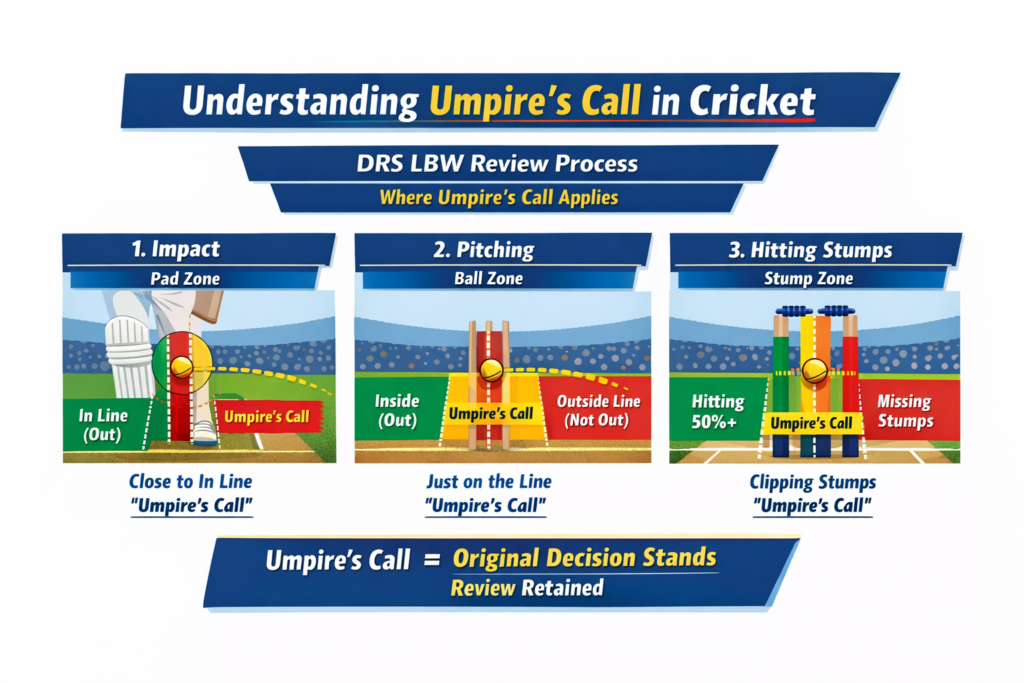
Umpire’s Call can apply in three areas of an LBW decision.
1. Impact of the Ball
If the ball hits the batter’s pad very close to the line of the stumps, the technology may show Umpire’s Call on impact.
2. Pitching of the Ball
Sometimes the ball pitches right on the line of leg stump. In such borderline situations, the system may again return Umpire’s Call.
3. Ball Hitting the Stumps
This is the most common situation.
If the predicted ball path shows less than half of the ball hitting the stumps, it is considered marginal.
The result becomes Umpire’s Call on hitting.
What Happens to the Review?
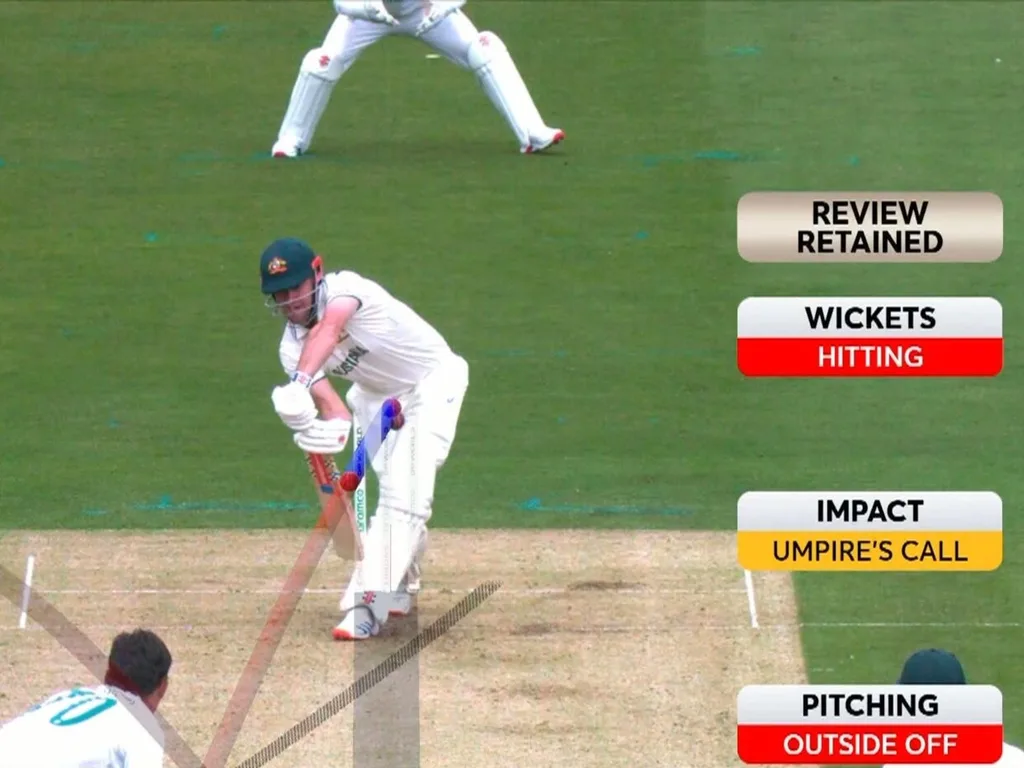
One of the most interesting parts of the rule is how it affects the team review.
| Situation | Result |
|---|---|
| Umpire gave OUT | Decision stays OUT |
| Umpire gave NOT OUT | Decision stays NOT OUT |
| Team reviewed decision | Review is retained |
This means teams do not lose a review if the decision results in Umpire’s Call.
Example of Umpire’s Call
Imagine the following scenario:
- Fast bowler appeals for LBW
- Umpire gives Not Out
- Bowling team uses DRS
Ball-tracking shows the ball just clipping the edge of leg stump.
Because the margin is very small, the system declares:
“Umpire’s Call – Not Out.”
The original decision stands, and the bowling team keeps its review.
Real Match Examples of Umpire’s Call
Understanding Umpire’s Call becomes much easier when we look at real match situations where this rule influenced the decision.
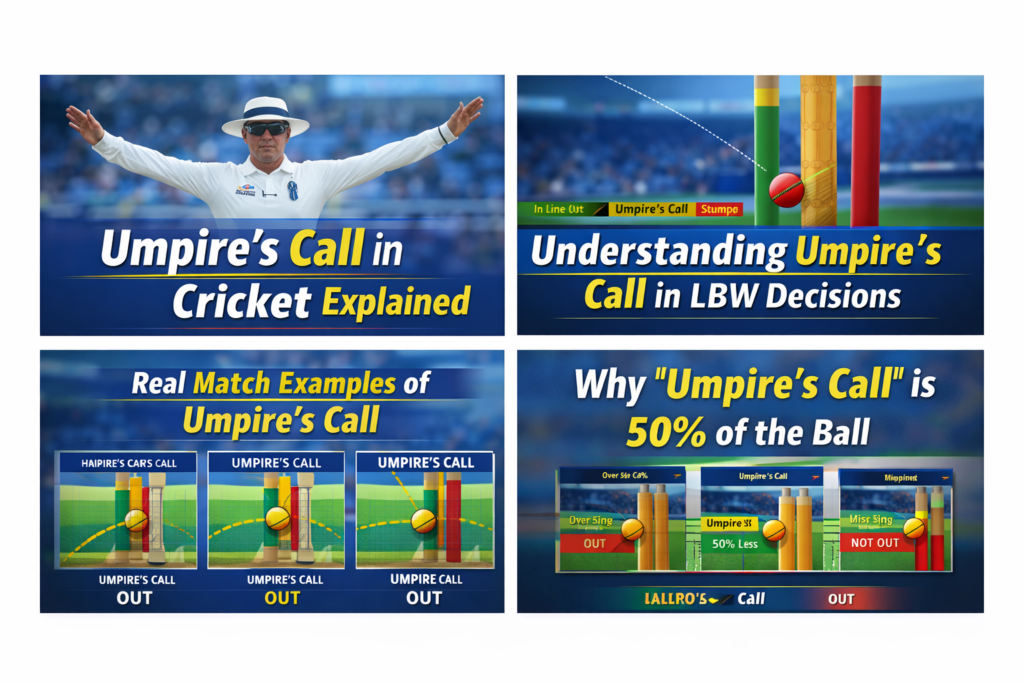
1. India vs England – Test Match (2021)
During the India vs England Test series in 2021, several LBW reviews resulted in umpire’s call decisions.
One notable example involved Rohit Sharma facing England spinner Jack Leach.
- England appealed for LBW
- On-field umpire gave Not Out
- England used DRS
Ball-tracking showed the ball just clipping leg stump.
Result:
Umpire’s Call – Not Out
Because the decision was marginal, the umpire’s original decision stayed and England retained their review.
2. Australia vs India – Border-Gavaskar Trophy (2023)
In the Border-Gavaskar Trophy 2023, umpire’s call played a role in several LBW reviews due to spinning conditions.
One review involved Steve Smith against Ravindra Jadeja.
- Jadeja appealed for LBW
- Umpire gave Out
- Smith reviewed the decision
Ball tracking showed less than half the ball hitting the stumps.
Result:
Umpire’s Call – Out
Since the original decision was out, the batter remained dismissed, but Australia kept their review.
3. ICC Cricket World Cup – Close LBW Decision
During multiple ICC Cricket World Cup matches, teams have experienced controversial umpire’s call decisions.
In one LBW review:
- Bowler appealed
- Umpire gave Not Out
- Fielding team reviewed
Ball-tracking predicted the ball barely touching the stumps.
Result:
Umpire’s Call – Not Out
These marginal calls often create debate among fans because the ball technically touches the stumps but not enough to overturn the umpire’s decision.
Why the Rule is Controversial
Umpire’s Call is one of the most debated rules in cricket.
Some fans argue that:
- If the ball is hitting the stumps, the batter should be out regardless of margin.
Others believe the rule is necessary because:
- Ball tracking is still a prediction
- Close decisions should respect umpire judgment
Despite the debates, the rule remains an important part of modern cricket.
How Umpire’s Call Changed Cricket
The introduction of DRS and umpire’s call has dramatically changed decision-making in cricket.
Benefits include:
- More accurate LBW decisions
- Reduced umpiring errors
- Strategic use of team reviews
Today, players and captains carefully decide when to use a review, knowing that marginal calls may still favor the umpire.
Why Umpire’s Call is 50% of the Ball – The Science Behind the Rule
One of the most common questions cricket fans ask is:
“Why does Umpire’s Call happen when only 50% of the ball is hitting the stumps?”
The answer lies in the predictive nature of ball-tracking technology used in the Decision Review System (DRS).
Systems such as Hawk-Eye track the ball’s trajectory using multiple high-speed cameras and then predict its path after the ball hits the batter’s pad. Because the ball is no longer visible after impact, the system uses physics-based modelling to estimate where it would have gone.
Since this prediction involves a small margin of uncertainty, cricket introduced the 50% rule to determine when a decision should remain with the on-field umpire.
The 50% Ball Rule Explained
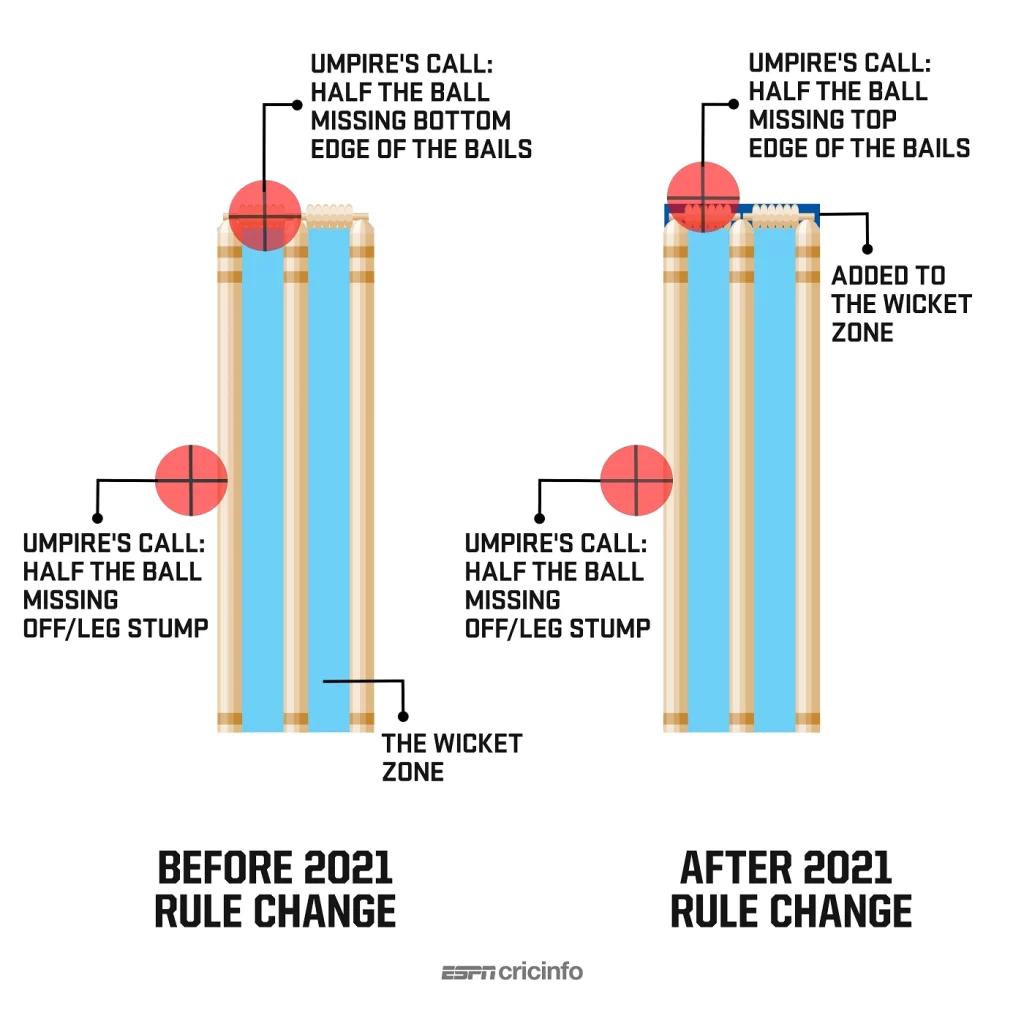
When the ball-tracking system shows that less than half of the ball is hitting the stumps, it is considered too marginal to overturn the umpire’s decision.
This leads to the result:
Umpire’s Call
In simple terms:
- More than 50% of the ball hitting the stumps → OUT
- Less than 50% hitting the stumps → Umpire’s Call
- Completely missing → NOT OUT
This rule ensures that extremely close calls do not rely entirely on predictive technology.
Why Cricket Uses the 50% Threshold
The 50% threshold was introduced to maintain fairness and reliability in DRS decisions.
There are three main reasons for this:
1. Margin of Prediction Error
Ball-tracking systems estimate the ball’s future path after impact. Even with advanced cameras and algorithms, there is a small error margin.
2. Respect for the On-Field Umpire
Cricket historically relies on the judgment of umpires. The 50% rule ensures technology supports the umpire rather than replacing them completely.
3. Consistency in Decision-Making
By using a fixed threshold, DRS provides a consistent standard for marginal LBW decisions.
Example of the 50% Rule in Action
Imagine an LBW review scenario:
- Bowler appeals for LBW
- Umpire gives Not Out
- Fielding team reviews
Ball-tracking shows the ball just clipping the outer edge of leg stump, with less than half the ball hitting.
Result:
Umpire’s Call – Not Out
Because the impact with the stumps is marginal, the original decision stays.
Why Fans Often Find the Rule Confusing
Many viewers think:
“If the ball is hitting the stumps, the batter should be out.”
However, DRS considers how much of the ball is hitting the stumps, not just whether it touches them.
This is why commentators often say:
“It’s only clipping the stump — that’s Umpire’s Call.”
The Balance Between Technology and Human Judgment
The 50% rule represents cricket’s attempt to balance:
- Human decision-making
- Advanced technology
- Fairness in marginal situations
Without this rule, extremely tiny margins could frequently overturn umpire decisions, which would reduce the authority of the on-field officials.
FAQs
What is Umpire’s Call in cricket?
Umpire’s Call is a DRS rule where the on-field umpire’s original decision stands if ball-tracking shows only a marginal outcome.
Do teams lose their review on umpire’s call?
No. If the result is umpire’s call, the reviewing team keeps its review.
Does umpire’s call only apply to LBW?
Yes, it mostly applies to LBW decisions reviewed using DRS ball-tracking.
Why is umpire’s call used in cricket?
It accounts for the small margin of uncertainty in predictive ball-tracking technology.
References
To ensure accuracy, the information in this article is based on official cricket rules and trusted cricket technology sources.
- International Cricket Council – Official Playing Conditions and Decision Review System guidelines.
https://www.icc-cricket.com/about/cricket/rules-and-regulations/playing-conditions - Marylebone Cricket Club – Laws of Cricket including LBW regulations.
https://www.lords.org/mcc/the-laws-of-cricket - Hawk-Eye Innovations – Ball-tracking technology used in the DRS system.
https://www.hawkeyeinnovations.com - ESPNcricinfo – Detailed explanations and analysis of DRS and umpire decisions.
https://www.espncricinfo.com - BBC Sport – Cricket rules and DRS explanations.
https://www.bbc.com/sport/cricket
Disclaimer
The information provided in this article is intended for educational and informational purposes about cricket rules and technologies. While every effort has been made to ensure accuracy, interpretations of the Decision Review System (DRS) and Umpire’s Call may vary depending on the official playing conditions used in different cricket competitions. Readers should refer to the official regulations published by the International Cricket Council and the Marylebone Cricket Club for the most authoritative and up-to-date rules.
This article does not represent any official cricket governing body and is intended solely to help fans better understand how the rule works in modern cricket.

