Cricket is one of the most exciting sports in the world, but it can also be confusing, especially for beginners. One of the most dramatic moments in modern cricket is the Super Over. If you have ever wondered what a Super Over is, why it happens, or how the Super Over rules work, this detailed guide on Super Over Rules Explained is written just for you.
This article is easy to understand, even if you have no cricket knowledge. We will explain everything step by step, use simple examples, provide visual explanations, and answer all common questions.
Table of Contents
What Is a Super Over in Cricket?
A Super Over is a special tie-breaker used in limited-overs cricket matches.
👉 When both teams score the same number of runs, the match is called a tie.
👉 To decide a winner, an extra mini-match is played.
👉 This mini-match is known as a Super Over.
In simple terms:
Super Over = One extra over to decide the winner of a tied match
Why Is the Super Over Important?
Before the Super Over was introduced:
- Many matches ended with no result
- Fans were disappointed
- Tournament rankings became complicated
The Super Over solves this problem by:
- Producing a clear winner
- Increasing entertainment value
- Keeping fans engaged till the last ball
This is why the Super Over has become extremely popular in modern cricket.
When Is a Super Over Used?
A Super Over is used only in limited-overs cricket.
Matches where Super Over is allowed:
- T20 Internationals
- One Day Internationals (ODIs – knockout matches)
- Indian Premier League (IPL)
- Other T20 leagues
Matches where Super Over is NOT used:
- Test matches
Test matches can end in a draw, so a Super Over is not required.
- Loading relevant tools…
Super Over Rules Explained Step by Step
Let’s now explain the Super Over rules in the simplest possible way.
Step 1: Match Ends in a Tie
Example:
- Team A scores 165 runs
- Team B scores 165 runs
➡ Match is tied
➡ Super Over is announced
Step 2: Toss for Super Over
- A coin toss decides:
- Which team bats first
- Which team bowls first
Step 3: Each Team Plays One Over
- Each team gets only 1 over
- One over = 6 legal balls
This is why it is called a Super Over.
Step 4: Batting Rules in Super Over
Each batting team can:
- Use only 2 batsmen
- Lose maximum 2 wickets
Important:
- If 2 wickets fall before 6 balls → innings ends immediately
Step 5: Bowling Rules in Super Over
- Only one bowler bowls the entire over
- Normal cricket rules apply:
- No-balls
- Wides
- Free hits (in T20 matches)
Step 6: Winner Is Decided
- Team batting second must score:
- More runs than the first team
- If successful → they win
- If scores are equal → another Super Over is played
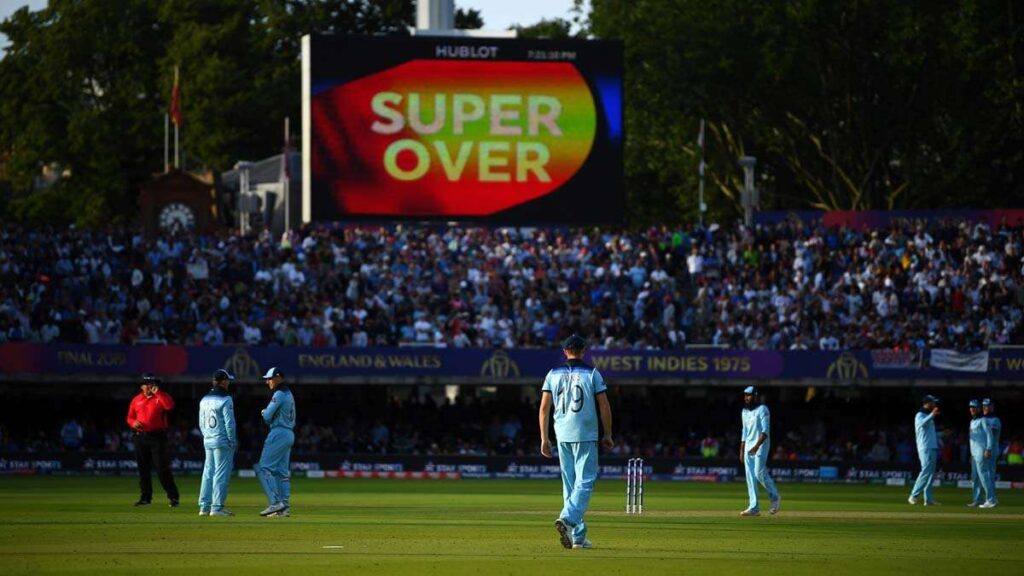
What Happens If the Super Over Is Also Tied?
Yes, a Super Over can also end in a tie.
Current Rule:
👉 Another Super Over is played
This continues until:
- One team scores more runs than the other
Earlier, boundary count rules were used, but they have now been removed for fairness.
Real-Life Super Over Example (Easy Explanation)
Let’s understand with a simple example.
Main Match:
- Team Red: 150 runs
- Team Blue: 150 runs
➡ Match tied
Super Over:
Team Red (Batting First)
- Scores: 12 runs
- Loses 1 wicket
Team Blue (Batting Second)
- Target: 13 runs
- Scores: 14 runs
🏆 Team Blue wins the match
Difference Between Normal Over and Super Over
| Feature | Normal Over | Super Over |
|---|---|---|
| Purpose | Regular gameplay | Tie-breaker |
| Overs | Many | Only 1 |
| Batsmen | Full team | Only 2 |
| Wickets | Up to 10 | Maximum 2 |
| Pressure | Normal | Extremely high |
Why Super Overs Are So Exciting
- Fast-paced action
- High pressure moments
- Star players involved
- Match decided in minutes
This is why Super Overs often become the most watched moments of a cricket match.
Common Misunderstandings About Super Over Rules
❌ Super Over is based on luck
✅ It depends on skill, strategy, and pressure handling
❌ Any player can bat or bowl
✅ Only players from the playing XI are allowed
❌ Super Over happens in every match
✅ Only when the match is tied
Super Over Rules Explained – Quick Summary
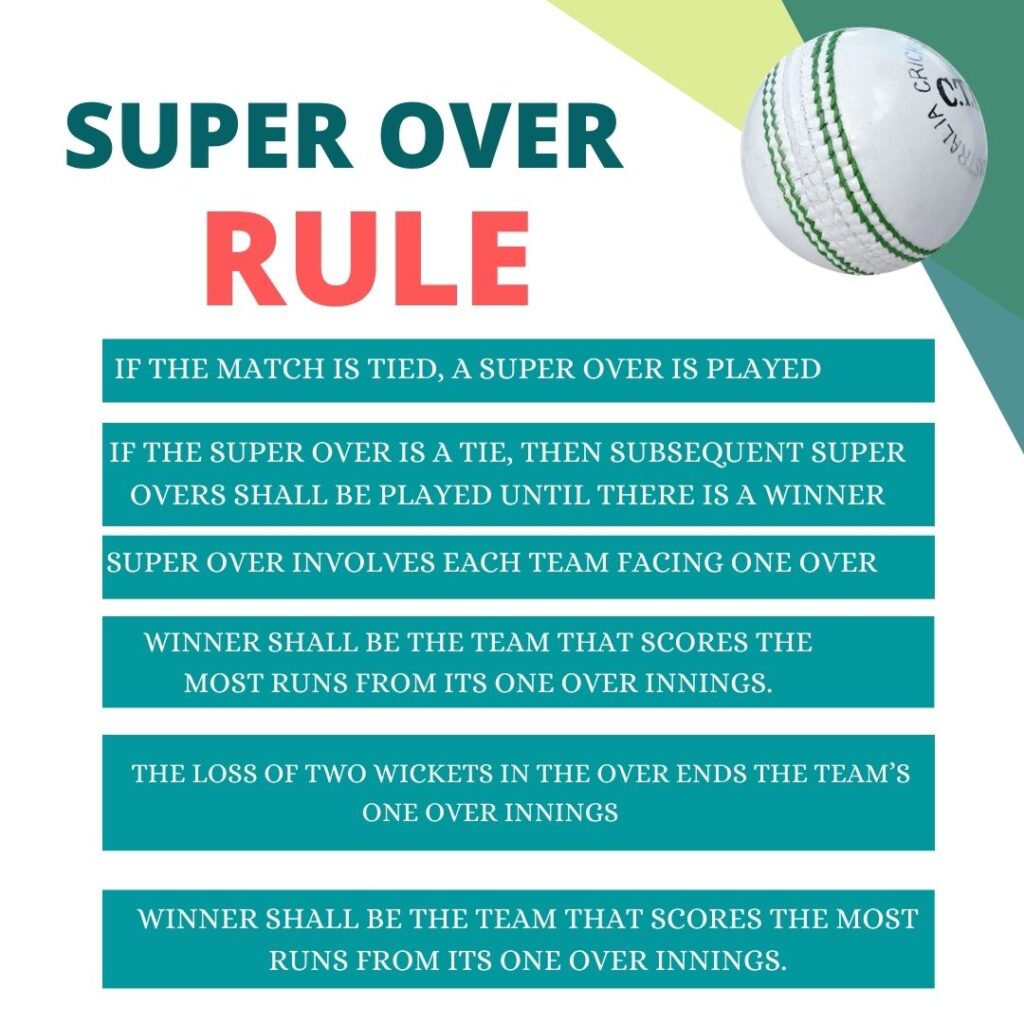
- Played when a match ends in a tie
- Each team gets 1 over (6 balls)
- Only 2 batsmen allowed
- Only 2 wickets allowed
- One bowler bowls the over
- More runs = winner
- Tie again → another Super Over
Frequently Asked Questions (FAQs)
Can Super Over happen in every cricket match?
No. Only in limited-overs matches, not Test cricket.
Can the same bowler bowl again in another Super Over?
Rules may vary by tournament, but usually bowlers cannot repeat immediately.
What if rain interrupts a Super Over?
Match officials decide based on playing conditions.
Is Super Over compulsory in IPL matches?
Yes, IPL uses Super Over to decide tied matches.
Can a Super Over decide a World Cup final?
Yes, it has happened before.
Reference Links
Official Rules & Governing Bodies
- ICC – Playing Conditions & Regulations (official rulebook repository)
https://www.icc-cricket.com/about/cricket/rules-and-regulations/playing-conditions
📊 Detailed Rule Explanations
- Wikipedia – Super Over (overview & history)
https://en.wikipedia.org/wiki/Super_Over
📰 Articles on Regulations & Rule Changes
- ICC Regulations for Super Over in T20Is
https://www.cricketworld.com/icc-regulations-for-super-over-in-t20i-matches/61785.htm - SportsAdda – Super Over rules explained
https://www.sportsadda.com/cricket/features/what-super-over-cricket-limited-overs-odi-t20-rules/ - Times of India – Super Over rules scenarios
https://timesofindia.indiatimes.com/sports/cricket/news/superover-rules-explained-what-happens-if-second-super-over-also-ends-in-a-tie-who-is-allowed-to-bat-or-bowl-and-who-not/articleshow/106949956.cms
📌 Example Historical Match
- Wikipedia – 2019 Cricket World Cup Final (tied game with Super Over)
https://en.wikipedia.org/wiki/2019_Cricket_World_Cup_final
Disclaimer
This article on Super Over Rules Explained is for educational and informational purposes only.
Cricket rules may change depending on:
- Tournament
- League
- Governing authority
Always follow official match regulations for final decisions.
Conclusion
The Super Over is cricket’s most thrilling tie-breaker. Even if you are new to the game, understanding Super Over rules will help you enjoy matches with more confidence and excitement.


jvfwgzejnpgnvepklksnkyvgnymvnj