Cricket is a game built on skill, strategy, and discipline. While fans often focus on wickets, centuries, and breathtaking catches, there is another aspect of the sport that can significantly influence a match—the management of time.
Over the years, cricket administrators have introduced various regulations to ensure matches progress at an acceptable pace. One such regulation is the Time Penalty Rule, a rule designed to discourage unnecessary delays and maintain fairness in the game.
If you’ve recently heard commentators discussing penalties for slow over rates or time deductions and wondered what it all means, this guide will provide a complete explanation. We’ll explore how the rule works, why it exists, its impact on teams, and some notable examples from international cricket.
Whether you’re a casual fan, fantasy cricket enthusiast, player, coach, or umpire, understanding the Time Penalty Rule Explained can help you better appreciate the tactical side of modern cricket.
Table of Contents
What is Time Penalty Rule Explained?
Featured Snippet Definition
The Time Penalty Rule in cricket is a regulation that penalizes teams for wasting time or failing to maintain the required over rate during a match. Penalties may include fines, suspension points, fielding restrictions, or runs awarded to the opposition depending on the competition and playing conditions.
The primary objective of the rule is simple: keep the game moving and ensure that teams do not gain an unfair advantage by deliberately slowing down play.
In modern cricket, governing bodies such as the International Cricket Council have implemented stricter measures to improve match flow and enhance the spectator experience.
Why It Matters
Cricket matches can already be lengthy affairs.
A Test match may span five days, while One Day Internationals and T20 matches have fixed schedules that broadcasters, venues, and fans rely upon.
Without time regulations:
- Teams could intentionally slow the game.
- Bowlers might take excessive time between deliveries.
- Captains could manipulate match situations.
- Spectators would experience unnecessary delays.
- Broadcast schedules would be disrupted.
The Time Penalty Rule ensures that the spirit of the game remains intact while maintaining competitive fairness.
History of Time Penalties in Cricket
The concept of penalizing teams for slow play is not entirely new.
Historically, cricket authorities relied on monetary fines to punish teams that failed to bowl their overs within the allotted time.
However, critics argued that financial penalties alone were insufficient because:
- Wealthier boards could absorb the fines.
- The punishment did not directly affect match outcomes.
- Repeat offenses continued to occur.
As a result, cricket authorities gradually introduced stronger deterrents, including:
- Captain suspensions
- Demerit points
- Championship point deductions
- In-match penalties
Recent years have seen the emergence of more visible sanctions, particularly in limited-overs cricket.
How the Rule Works
The exact application depends on the format and competition.
However, the process generally follows these principles:
1. Establish Required Over Rate
Match regulations specify how many overs must be bowled within a designated timeframe.
2. Monitor Progress
Match officials continuously track the team’s over rate.
3. Account for Allowances
Certain delays are considered legitimate, including:
- Injury treatment
- DRS reviews
- Weather interruptions
- Ball changes
- Player substitutions
4. Determine Shortfall
Officials calculate whether the fielding side has completed the required overs.
5. Apply Penalties
If the team falls behind the required rate, penalties are imposed according to competition rules.
Types of Time Penalties in Cricket
Different cricket competitions use different penalties.
Slow Over Rate Penalties
These occur when teams fail to bowl overs quickly enough.
Possible consequences include:
- Monetary fines
- Captain sanctions
- Suspension points
- Team penalties
Fielding Restrictions
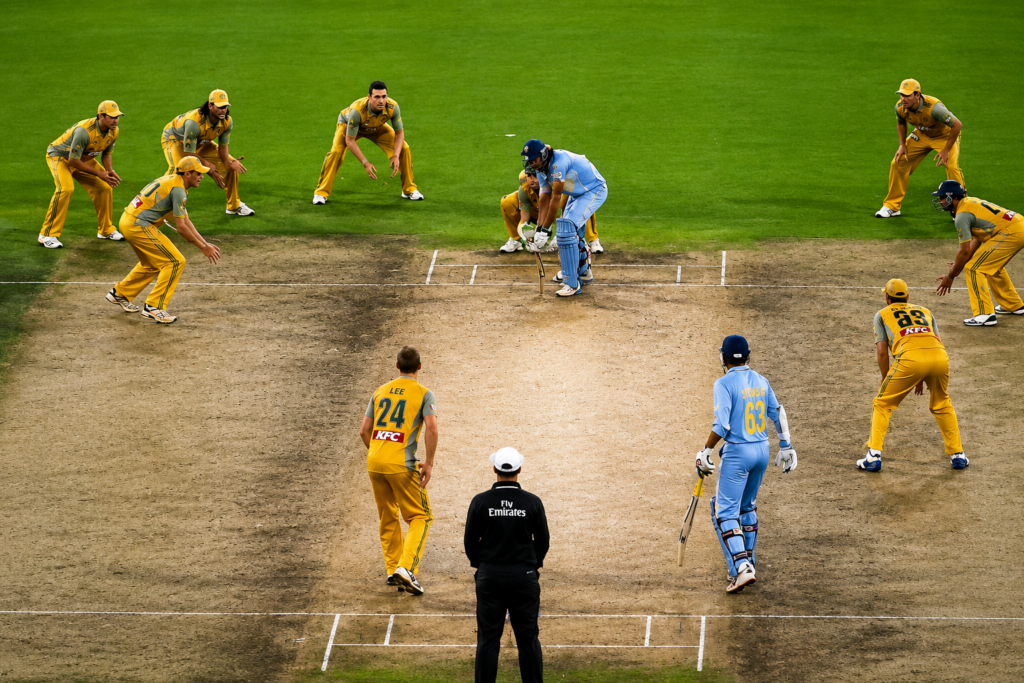
In some T20 competitions, teams falling behind the required over rate may face additional fielding restrictions.
This often means:
- Fewer fielders allowed outside the inner circle.
- Increased scoring opportunities for batters.
Championship Point Deductions
Certain Test competitions have imposed point deductions for slow over rates.
This can significantly affect standings and qualification scenarios.
Penalty Runs
In specific circumstances involving deliberate time wasting, umpires may award runs to the opposition.
Key Benefits
The Time Penalty Rule offers several advantages.
Improves Match Flow
Faster over rates create a better viewing experience.
Enhances Fairness
Teams cannot gain strategic advantages through deliberate delays.
Encourages Discipline
Captains and players become more accountable.
Supports Broadcasting Requirements
Matches are more likely to finish within expected timeframes.
Protects the Spirit of Cricket
The game remains competitive and entertaining.
Common Challenges
Despite its benefits, implementing the rule isn’t always straightforward.
Multiple Legitimate Delays
Modern cricket includes:
- DRS reviews
- Injury assessments
- Strategic discussions
- Equipment checks
Determining what constitutes genuine delay can be challenging.
Weather Interruptions
Rain and poor light often complicate over-rate calculations.
Tactical Complexity
Captains must balance:
- Bowling changes
- Field placements
- Match strategy
while maintaining the required pace.
Format Differences
The ideal over rate in T20 cricket differs significantly from Test cricket.
Step-by-Step Guide: How Officials Apply Time Penalties
Step 1: Track Scheduled Overs
Officials know how many overs should be completed at specific times.
Step 2: Monitor Delays
Every interruption is recorded.
Step 3: Calculate Allowances
Approved delays are deducted from the calculation.
Step 4: Measure Actual Progress
Officials compare completed overs against expectations.
Step 5: Determine Breach
Any significant shortfall is identified.
Step 6: Apply Competition Regulations
Relevant penalties are enforced.
Step 7: Report Findings
Match referees document violations and sanctions.
Practical Examples
Understanding the rule becomes easier through real-world scenarios.
Example 1: T20 Slow Over Rate
Team A is required to complete 20 overs within the allocated timeframe.
At the scheduled finish time:
- Only 18 overs have been bowled.
- Approved allowances account for just 0.5 overs.
Result:
The team remains behind the required rate and receives a penalty under tournament regulations.
Example 2: Test Championship Impact
A team completes a Test match but is found to be four overs short after allowances.
Potential consequence:
- Championship point deductions.
- Reduced standings position.
- Qualification complications.
Example 3: Field Restriction Penalty
A fielding side falls behind the required over rate during a T20 match.
For the final overs:
- Additional fielders must remain inside the circle.
Result:
Batters gain more scoring opportunities.
Example 4: Deliberate Time Wasting
A captain repeatedly delays field placements without valid reason.
Umpires determine the actions are intentional.
Possible outcome:
- Official warning.
- Penalty runs awarded.
- Further disciplinary action.
Comparison Table
| Situation | Time Violation | Possible Penalty |
|---|---|---|
| Slow over rate in T20 | Overs not completed on time | Fielding restrictions |
| Slow over rate in ODI | Required overs missed | Fines or sanctions |
| Slow over rate in Test | Overs short of target | Championship point deductions |
| Deliberate time wasting | Intentional delay | Penalty runs |
| Repeated offenses | Multiple breaches | Captain suspension |
The Impact on Captains
Captains carry the greatest responsibility.
They must ensure:
- Quick field adjustments
- Efficient bowling changes
- Fast decision-making
- Compliance with playing conditions
A captain who repeatedly violates over-rate requirements may face:
- Fines
- Match bans
- Demerit points
- Reputational damage
Many experienced captains now assign players specific responsibilities to help maintain over rates.
How Teams Avoid Time Penalties
Professional teams invest significant effort in preventing penalties.
Common strategies include:
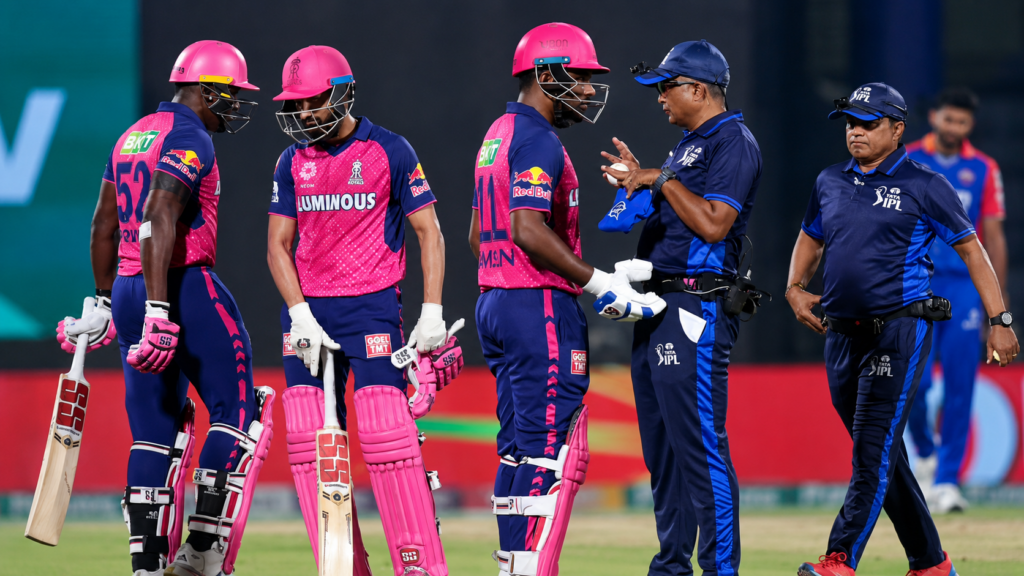
Faster Field Changes
Players move into positions immediately after each delivery.
Pre-Planned Bowling Rotations
Captains know in advance when bowlers will be introduced.
Efficient Communication
Teams reduce unnecessary mid-over discussions.
Better Fitness
Fit players reposition more quickly.
Match Awareness
Support staff continuously monitor over rates.
Best Practices
Teams seeking to avoid time penalties should focus on the following:
- Monitor over rates throughout the innings.
- Minimize unnecessary discussions.
- Prepare bowling changes early.
- Improve player fitness.
- Use support staff effectively.
- Respond quickly to umpire warnings.
- Understand tournament-specific regulations.
Common Mistakes to Avoid
Ignoring Early Warnings
Many teams wait until the situation becomes critical.
Excessive Tactical Meetings
Repeated conferences consume valuable time.
Delayed Field Placements
Frequent repositioning can slow the game.
Over-Reliance on Spin Changes
Constant bowling changes may affect over rates.
Misunderstanding Playing Conditions
Different tournaments have different rules.
Expert Tips
Having observed professional cricket over the years, one pattern becomes clear: teams that consistently maintain good over rates are usually highly organized teams.
Consider these expert recommendations:
Think Ahead
Captains should anticipate future scenarios rather than reacting.
Keep Communication Brief
Long discussions rarely provide enough value to justify lost time.
Use Senior Players
Experienced players can help manage field placements.
Build Awareness
Every player should understand current over-rate requirements.
Practice Match Tempo
Teams should simulate match pace during training sessions.
How Time Penalties Affect Fantasy Cricket and Betting Analysis
Fantasy cricket players often focus solely on batting and bowling statistics.
However, time penalties can influence:
- Bowling rotations
- Fielding restrictions
- Match momentum
- Death-over scoring rates
For example, a field restriction penalty late in a T20 innings can create additional boundary opportunities, potentially affecting fantasy scores.
Analysts increasingly monitor over-rate trends when evaluating team discipline and match management.

Frequently Asked Questions
What is the Time Penalty Rule in cricket?
It is a regulation that penalizes teams for wasting time or failing to maintain required over rates during matches.
Why was the Time Penalty Rule introduced?
The rule was introduced to improve match flow, ensure fairness, and prevent deliberate delays.
Does the rule apply to all cricket formats?
Yes, although the specific penalties vary across Test matches, ODIs, T20 Internationals, and domestic competitions.
What happens if a team has a slow over rate?
Possible penalties include fines, fielding restrictions, championship point deductions, or captain suspensions.
Are injury delays counted against a team?
Generally no. Legitimate delays such as injuries and DRS reviews are usually considered allowances.
Can a captain be suspended for repeated offenses?
Yes. Repeated slow over-rate violations can lead to captain suspensions in some competitions.
What are penalty runs?
Penalty runs are additional runs awarded to the opposition when a team breaches certain laws or deliberately wastes time.
How do umpires determine time-wasting?
Umpires assess player actions, match circumstances, warnings issued, and whether delays appear intentional.
Are Time Penalty Rules the same worldwide?
No. Specific regulations differ depending on the governing body and tournament playing conditions.
Can Time Penalties affect tournament standings?
Yes. In some competitions, especially Test championships, point deductions can significantly impact standings.
Final Thoughts
Understanding the Time Penalty Rule Explained is essential for anyone who follows modern cricket. While batting records and bowling performances dominate headlines, effective time management often plays a crucial role behind the scenes.
The rule exists to preserve fairness, maintain entertainment value, and ensure that teams compete within the spirit of the game. Whether through slow over-rate sanctions, fielding restrictions, penalty runs, or championship point deductions, cricket’s governing authorities have made it clear that unnecessary delays will not be tolerated.
For players, captains, coaches, and fans alike, awareness of time penalties provides a deeper understanding of match strategy and tournament dynamics. As cricket continues to evolve, efficient game management will remain just as important as skill and talent on the field.
References
- International Cricket Council
URL: https://www.icc-cricket.com - Marylebone Cricket Club
URL: https://www.lords.org/mcc - England and Wales Cricket Board
URL: https://www.ecb.co.uk - Cricket Australia
URL: https://www.cricketaustralia.com.au - Board of Control for Cricket in India
URL: https://www.bcci.tv - Wisden
URL: https://www.wisden.com - ESPNcricinfo
URL: https://www.espncricinfo.com
Disclaimer
Educational Disclaimer
This article is intended for educational and informational purposes only. Cricket playing conditions, over-rate regulations, and time penalty rules may vary across tournaments, domestic leagues, and international competitions. Readers should consult the latest official playing conditions and regulations issued by the relevant cricket governing authority for the most current and accurate information.
